Introduction
In today’s busy and fast-paced world, sleep is often ignored or sacrificed for work, studies, or entertainment. However, sleep is not a luxury—it is a basic human need that plays a vital role in maintaining both physical and mental health.
Getting enough quality sleep helps your body recover, improves brain function, and keeps your emotions balanced. On the other hand, poor sleep can lead to serious health problems over time.
In this guide, you will learn about the importance of sleep, its benefits, and how it affects your overall well-being.
What Happens When You Sleep?
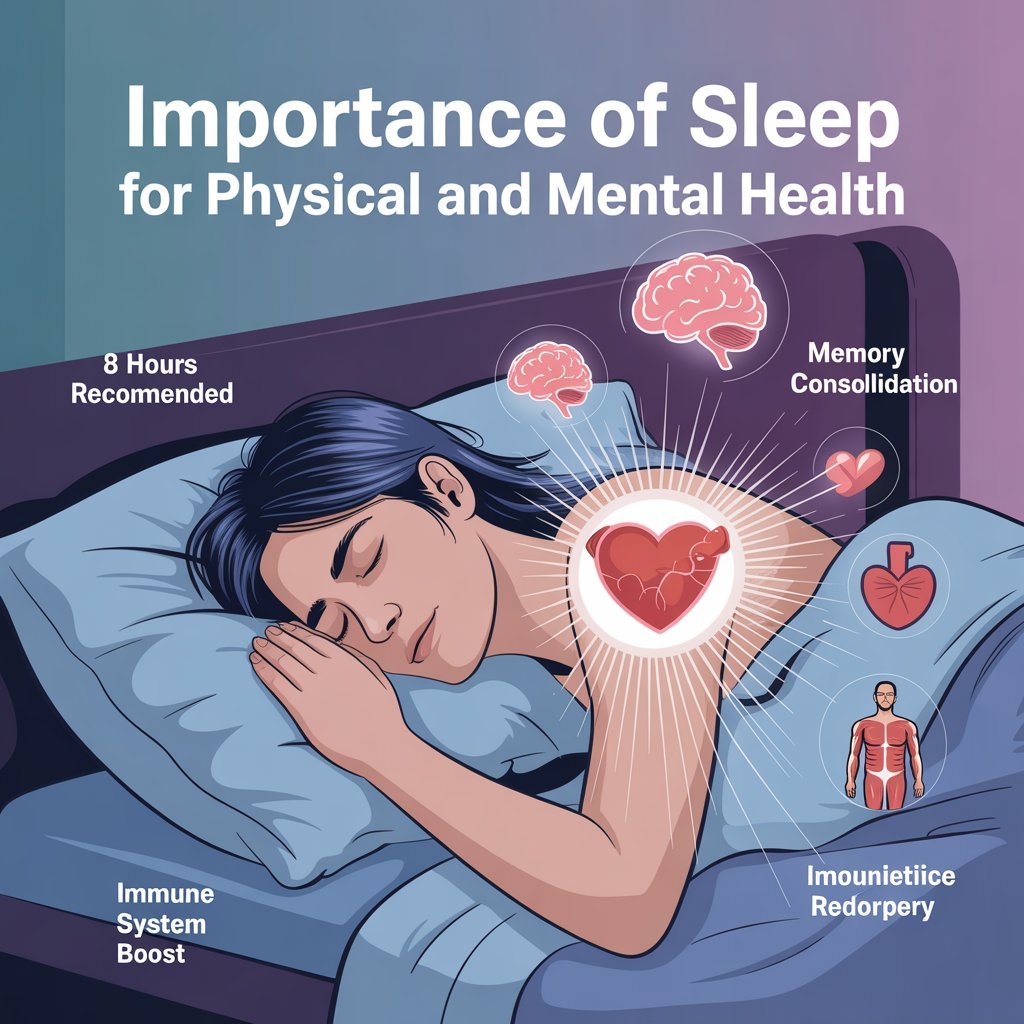
Sleep is an active process, not just rest. While you sleep:
- Your body repairs muscles and tissues
- Your brain processes information and memories
- Hormones are regulated
- Your immune system strengthens
Sleep allows your body and mind to reset for the next day.
Benefits of Sleep for Physical Health
1. Strengthens the Immune System
Good sleep helps your body fight infections and diseases. When you don’t get enough sleep, your immune system becomes weaker, making you more likely to get sick.
2. Supports Heart Health
Sleep helps regulate blood pressure and reduces stress on the heart. Poor sleep increases the risk of:
- High blood pressure
- Heart disease
- Stroke
3. Helps Maintain a Healthy Weight
Sleep affects hormones that control hunger.
- Lack of sleep increases appetite
- Leads to cravings for unhealthy foods
- Can cause weight gain over time
4. Improves Energy Levels
A good night’s sleep restores your energy, helping you stay active and productive throughout the day.
5. Aids Muscle Recovery
Sleep is essential for repairing muscles and tissues, especially after physical activity.
Benefits of Sleep for Mental Health
1. Improves Mood
Quality sleep reduces irritability, mood swings, and emotional stress.
2. Enhances Focus and Memory
During sleep, your brain processes and stores information, improving learning and concentration.
3. Reduces Stress and Anxiety
Sleep helps regulate stress hormones. Lack of sleep can increase anxiety levels and make it harder to manage daily challenges.
4. Supports Emotional Balance
When you are well-rested, you can think clearly and respond calmly to situations.
How Much Sleep Do You Need?
Sleep needs vary by age:
- Adults: 7–9 hours
- Teenagers: 8–10 hours
- Children: 9–12 hours
Consistency is just as important as duration.
Signs of Poor Sleep
If you experience the following regularly, you may not be getting enough sleep:
- Constant tiredness
- Difficulty concentrating
- Mood changes
- Frequent headaches
- Low energy
These signs indicate that your body needs more rest.
Effects of Sleep Deprivation
Long-term lack of sleep can lead to serious health issues:
- Obesity
- Diabetes
- Heart disease
- Depression
- Weak immune system
Ignoring sleep can negatively impact your overall quality of life.
Tips to Improve Sleep Quality
1. Maintain a Regular Sleep Schedule
Go to bed and wake up at the same time every day.
2. Limit Screen Time Before Bed
Avoid phones, TVs, and laptops at least 30–60 minutes before sleeping.
3. Create a Relaxing Environment
Keep your bedroom:
- Quiet
- Dark
- Cool
4. Avoid Caffeine at Night
Caffeine can disturb your sleep cycle.
5. Develop a Bedtime Routine
Simple habits like reading or meditation can help your body relax.
Simple Night Routine for Better Sleep
- Turn off screens 30 minutes before bed
- Practice deep breathing or meditation
- Drink warm water or herbal tea
- Go to bed at a fixed time
Consistency improves sleep quality over time.
Common Sleep Mistakes to Avoid
1. Irregular Sleep Schedule
Sleeping at different times confuses your body clock.
2. Using Phone in Bed
Blue light affects melatonin production.
3. Overthinking Before Sleep
Stress and anxiety can delay sleep.
4. Heavy Meals at Night
Eating too much before bed can cause discomfort.
Benefits of Good Sleep
When you sleep well, you may experience:
- Better physical health
- Improved mental clarity
- Higher energy levels
- Better mood
- Stronger immune system
- Increased productivity
Sleep improves both quality and performance of life.
Conclusion
Sleep is one of the most important factors for maintaining physical and mental health. It supports your immune system, improves brain function, regulates emotions, and boosts overall energy.
Ignoring sleep can lead to serious health problems, while prioritizing it can transform your life.
Make sleep a priority, not an option. Your body and mind depend on it 🌙
FAQs
1. Is 6 hours of sleep enough?
Most adults need at least 7 hours for optimal health.
2. Can I recover lost sleep on weekends?
Extra sleep helps slightly, but a regular sleep schedule is more effective.
3. Does sleep affect mental health?
Yes. Poor sleep increases stress, anxiety, and mood disorders.
4. Why do I feel tired after sleeping?
It may be due to poor sleep quality or irregular sleep patterns.
5. Are naps good or bad?
Short naps (20–30 minutes) can boost energy, but long naps may affect night sleep.